- Neurodiverse Diary
- Posts
- 📧 Why Your Brain Hits “Send” Before You Think
📧 Why Your Brain Hits “Send” Before You Think
PLUS: The Science on Improving Impulse Control in ADHD, & Is Messi Autistic?

AuDHD Exec
January 11, 2026
In partnership with


Global HR shouldn't require five tools per country

Your company going global shouldn’t mean endless headaches. Deel’s free guide shows you how to unify payroll, onboarding, and compliance across every country you operate in. No more juggling separate systems for the US, Europe, and APAC. No more Slack messages filling gaps. Just one consolidated approach that scales.

“You just can’t help yourself, can you?”
We’re the real sinners on the block.
Why we lack Impulse control
It’s not about “laziness” or “bad behavior,” it’s rooted in neurobiology.
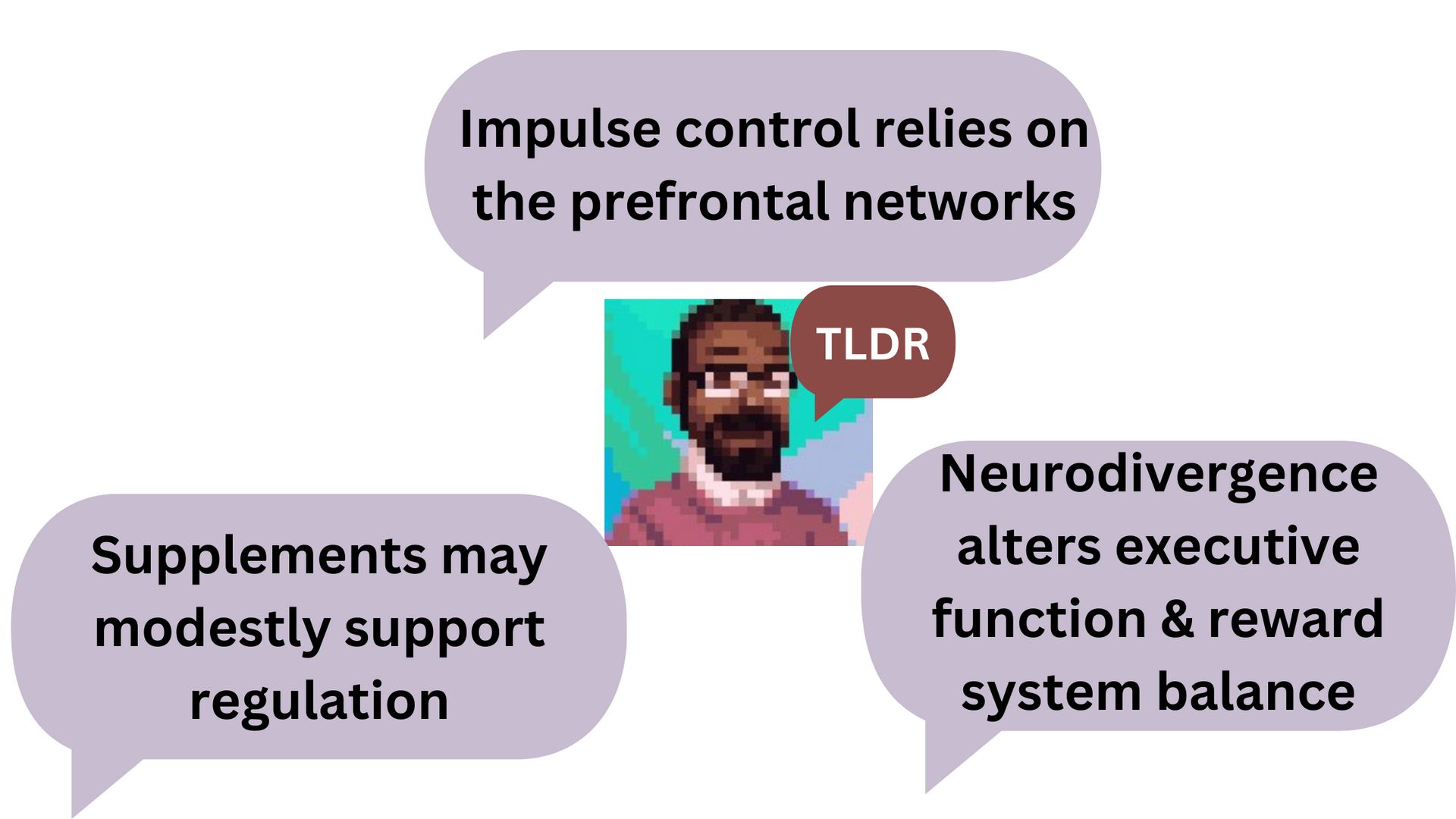
Impulse control issues are common in neurodivergent conditions like ADHD and autism, stemming from differences in brain function and structure.
Essentially, our brains process
Decisions,
Emotions, and
Actions differently,
Often leading to quicker reactions without full consideration of consequences. If we see something alluring, we buy it; if we think something, we say it out loud!
Prefrontal Cortex Development
The prefrontal cortex is like the brain’s “control center” for executive functions, including:
Planning,
Decision-making, and
Suppressing impulses
In neurodivergent individuals, the prefrontal cortex often develops differently or more slowly, sometimes “slower” compared to neurotypical brains.
The good news…
The brain’s plasticity means strategies and supports can help strengthen these pathways over time.
1) Identify and Manage Triggers
i) Track your weak spots
I tend to journal or make a note of when my impulses strike. For me, it’s stress, as a result, I try to remove “temptations”, like turning off notifications during focus time.
ii) Build Supportive Routines & Environment
Break tasks into small steps and reduce distractions. Bullet journaling helps me with this.
Practice planned pauses before high-impulse decisions. Better to pause for a hot second than rush and do or say something careless!
2) Nutrition & Lifestyle
Emerging research suggests nutrition and metabolic factors can play a role in brain function, including impulse control
Magnesium, I’ve said this before, this is my “chill pill”.
I think it calms my nerves down, making me more “measured” with my split-second responses.
Some clinical studies suggest magnesium supplementation may support emotional and behavioural regulation, especially if levels are low.
Please check in with your doc.
3) Mindfulness & Movement
This has been effective for me. I spend about 15 - 30 mins daily doing some sort of mindfulness and deep breathing exercises.
It can boost the prefrontal cortex function and emotional regulation.
I enjoy that state of mind.
Calm
Composed
Each time I find myself in situations where I’m “rattled”, be it a colleague playing the “blame game” when shit hits the fan, I’m able to pause, and tap into that by doing the deep breaths. Even if it just takes 30 seconds.

If you enjoyed this post, or know people who can benefit from it. Please spread the word. They can subscribe at neurodiversediary.io/subscribe
One Scoop Ahead

AG1 is a daily health drink that supports gut health, helps fill common nutrient gaps, and supports steady energy. One scoop each morning makes it easy to build a habit that actually lasts. Try AG1 today.

In other neuro-related news…
Leo Messi, who is my G.O.A.T, has sparked discussions and speculations in the neurodiverse community about his display of autistic symptoms.

Stop planning. Start building. With beehiiv, this the end of the year is a great time to get ahead. Build a website with AI, launch a newsletter in minutes, and start earning through the Ad Network. Use code BIG30 for 30 percent off your first three months. Start building for 20 percent off today.
Lastly,
Stay Different,
The AuDHD Exec
Disclaimer: I am not your psychiatrist, coach, doctor. Neurodiverse Diary does not provide medical services or professional counselling and is not a substitute for professional medical care. Everything I publish represents my opinions, experience, not advice.

What's your thoughts on this week's post? |
Reply