- Neurodiverse Diary
- Posts
- 📉Neurodiversity and Tenure at Work
📉Neurodiversity and Tenure at Work
Understanding Tenure Through a Neurodiverse Lens

AuDHD Exec
February 01, 2026
In partnership with


There’s more to AI than ChatGPT.

If you’re only using AI to rewrite emails, you’re doing it wrong.
The AI for Business & Finance Certificate from Columbia Business School Exec Ed breaks down how to use AI to make faster, more strategic decisions at work.
Save $300 with code SAVE300 + $200 with early enrollment by Feb. 17.

Neurodiversity in the workplace is all about embracing different brain wirings, like autism and ADHD, to boost innovation and productivity.
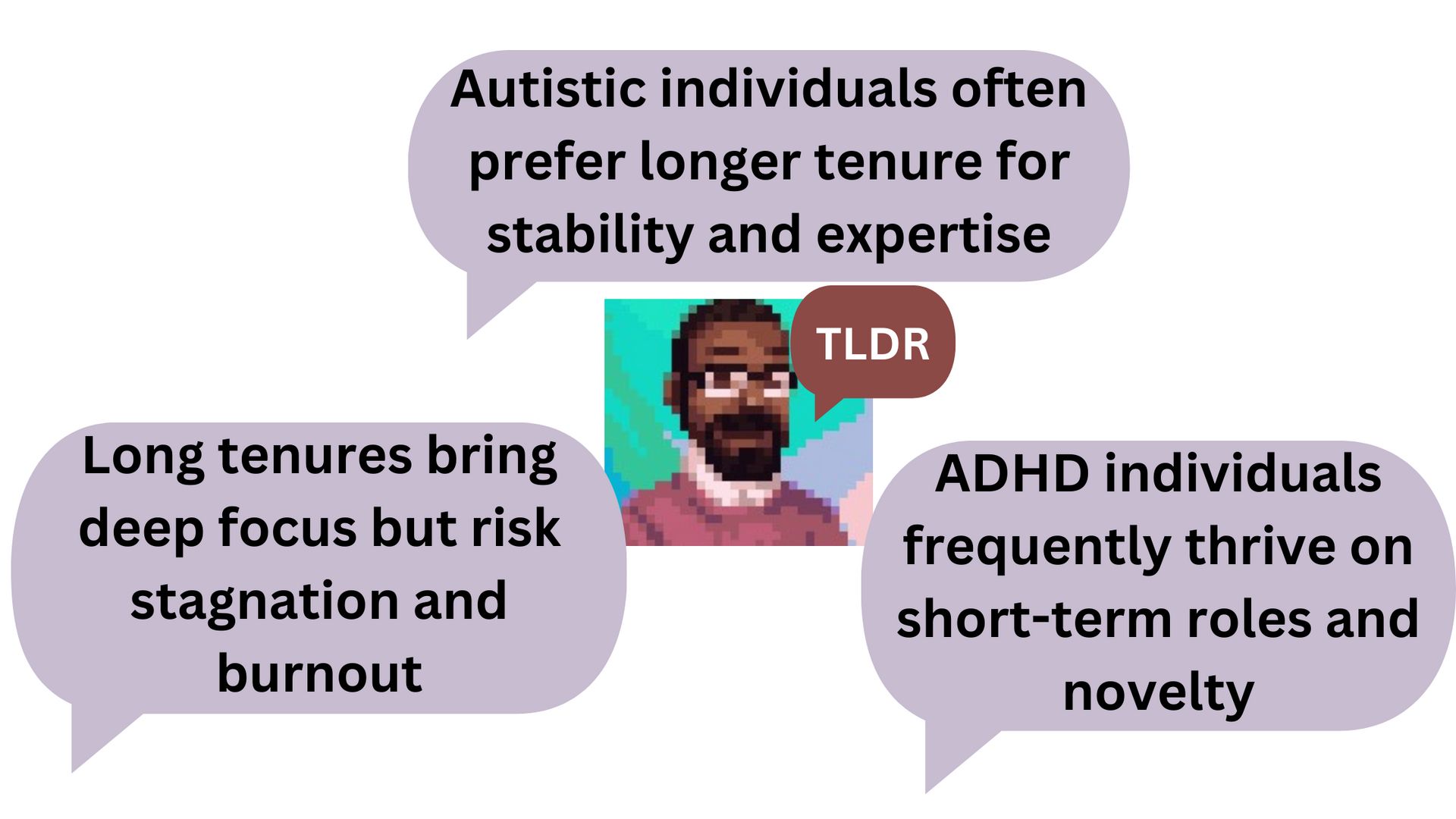
Tenure isn’t one-size-fits-all. For some autistic individuals, longer stints feel like home base:
Familiar routines
Reduce sensory overload and
Build deep expertise
On the flip side, many with ADHD thrive on:
Novelty
Jumping between projects or gigs like consultants to keep the dopamine flowing.
I’ve done both long- and short-term roles. This isn’t universal, neurodiversity is a spectrum!, but it’s a solid starting point for a discussion.
Long-Term Tenure: The Autistic Sweet Spot
Pros:
Stability Superpower
Predictable environments let autistic folks master their craft without constant adaptation. Think: Becoming the go-to expert on a team, potentially leading to promotions and job security.
Deep Focus Wins
Extended time fosters hyperfocus on complex tasks, driving innovation in fields like tech or research.
Loyalty Boost
Companies retain institutional knowledge, reducing turnover costs and building inclusive cultures.
Cons:
Stagnation Risk
Without fresh challenges, boredom or burnout can creep in if roles don’t evolve.
Adaptation Hurdles
Sudden changes (e.g., mergers, a new supervisor/line manager) might overwhelm, leading to higher stress or exits.
Opportunity Miss
Staying put could mean missing diverse experiences that broaden skills.
Short-Term Tenure: ADHD’s Adventure Mode
Pros:
Novelty Vibes
Frequent shifts keep engagement high, channeling hyperactivity into creative problem-solving across projects.
Flexibility Freedom
Consulting gigs allow autonomy, perfect for managing executive function challenges with self-paced work.
Skill-Building Sprint
Quick exposures build a versatile resume, making ADHDers adaptable innovators in dynamic industries like marketing or startups.
Cons:
Instability Pitfalls
Job-hopping might signal unreliability to employers, hindering benefits like pensions or seniority.
Networking Fatigue
Constant transitions require rebuilding relationships, which can drain social energy.
Depth Dilemma
Shallow dives might limit mastery, potentially capping career growth in specialized fields. Jack of all trades…
Tenure through neurodiversity flips the script from “loyalty vs. flightiness” to “matching brains to roles.” It’s about creating workplaces where everyone shines.

If you enjoyed this post, or know people who can benefit from it. Please spread the word. They can subscribe at neurodiversediary.io/subscribe

In other neuro-related news…
This should help the people-pleasing neurodivergents… Trevor Noah, an ADHDer, explains why we should start by saying NO
Lastly,
Stay Different,
The AuDHD Exec
Disclaimer: I am not your psychiatrist, coach, doctor. Neurodiverse Diary does not provide medical services or professional counselling and is not a substitute for professional medical care. Everything I publish represents my opinions, experience, not advice.

What's your thoughts on this week's post? |
Reply