- Neurodiverse Diary
- Posts
- 📂 It’s Never Personal, It’s Just Business
📂 It’s Never Personal, It’s Just Business
Mastering emotional regulation as a neurodivergent professional

AuDHD Exec
January 25, 2026
In partnership with



One Simple Scoop For Better Health

The best healthy habits aren't complicated. AG1 Next Gen helps support gut health and fill common nutrient gaps with one daily scoop. It's one easy routine that fits into real life and keeps your health on track all day long. Start your mornings with AG1 and keep momentum on your side.

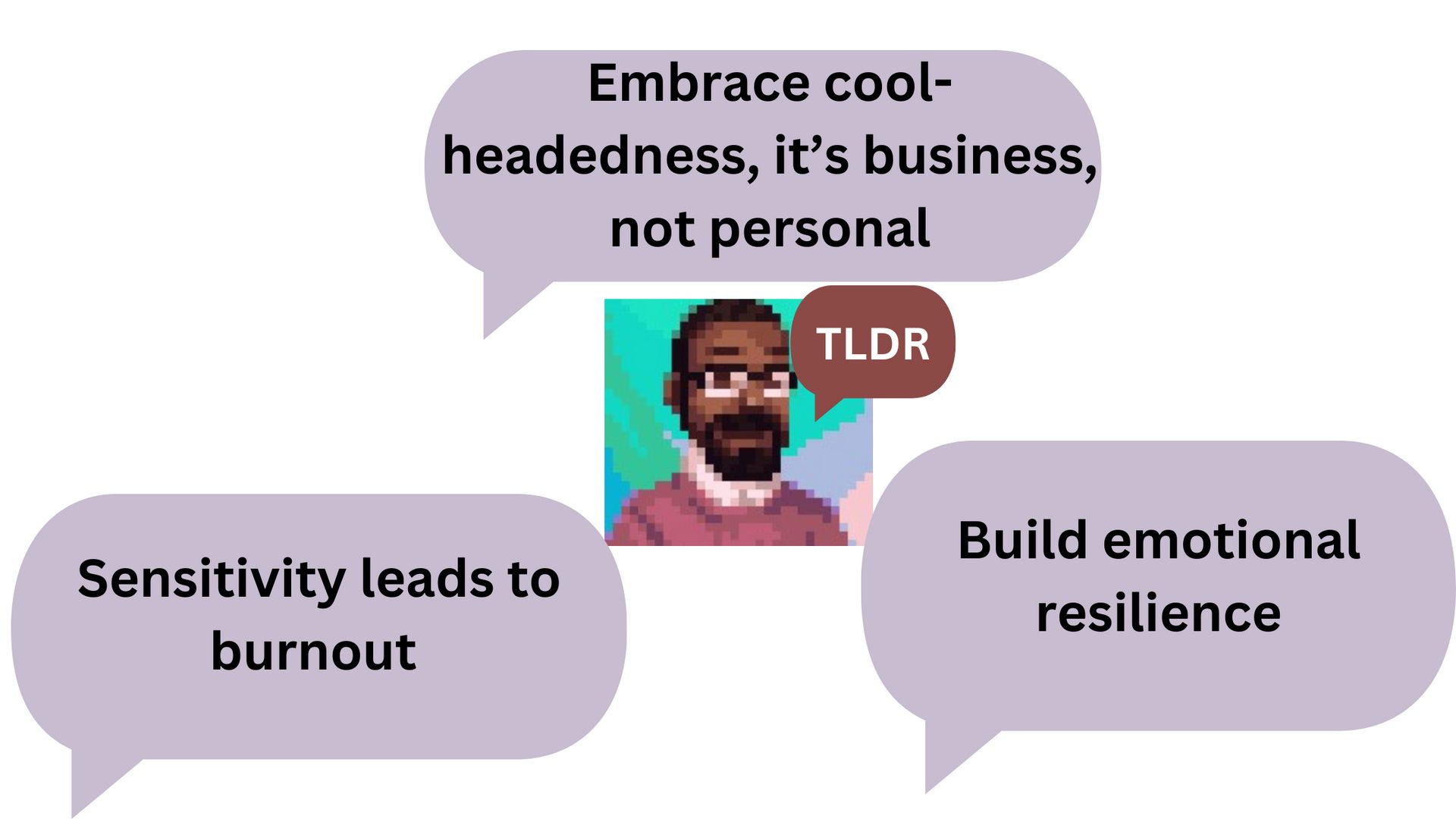
Man, I envy the cool-headed people, the ones who show minimal emotions, sensitivity, and get to work.
I never used to like them, particularly early in my career. I thought they were emotionless assholes.
As a trauma survivor moving up in the career ladder, I started to see that if we care about and are sensitive to everything… well, it’s like a hamster on the wheel.
Leading to burnout and getting nothing done.
The problem with us neurodivergents is that we may be sensitive, emotional, and can get triggered about anything! Spending more time than necessary dwelling on it.
We’re passionate, emotional people, and as a result, we may overreact or internalize things, be it:
Criticism
Feedback we may not agree with
Rejection or setback
1) Talk to someone
This is an opportunity to rant, ramble, and to get a different perspective from someone else.
As sensitive, emotional people, we may not see things from someone else’s point of view, which leads to jumping to conclusions and hindering our reasoning as we’re in our feelings. Not that our feelings are invalid.
2) Take time to reflect
This is something I do a lot. I play chess, and there was a point at which I made zero improvement, making the same mistakes until I started to review and reflect on my game. Asking questions:
“What went wrong?”
“What could I have done differently?”
3) Supplemental/diet
Certain foods can spike energy levels (often via blood sugar fluctuations) and have knock-on effects on emotions. As a result, I aim to stock up on the following supplements:
i) Magnesium
I take this every day, not just before bed time, I swear by it being my “chill pill”
ii) Camomile & green tea
I reduced my coffee consumption; I found it makes me highly irritable, which isn’t helpful for keeping calm and composed. Camomile and green tea have been my go-to teas for calmness.
iii) Ashwaghanda
This is my favourite for being in the “I don’t give a f*ck phase.” Nothing bothers me at all.
4) Movement
Physical exercise is probably my first line of defence when it comes to building immunity from the emotional, sensitive vulnerabilities.
Exercising gives me dopamine (the feel-good feeling). Giving me the motivation feeling.
All of the above enhance my capacity to deal with any emotional stress.

If you enjoyed this post, or know people who can benefit from it. Please spread the word. They can subscribe at neurodiversediary.io/subscribe
Get more done with one hand
Dictate emails, school notes, and side-hustle updates while you care for your family. Wispr Flow cleans your words and formats lists so you can send without retyping. Try Wispr Flow for parents.
Lastly,
Stay Different,
The AuDHD Exec
Disclaimer: I am not your psychiatrist, coach, doctor. Neurodiverse Diary does not provide medical services or professional counselling and is not a substitute for professional medical care. Everything I publish represents my opinions, experience, not advice.

What's your thoughts on this week's post? |
Reply